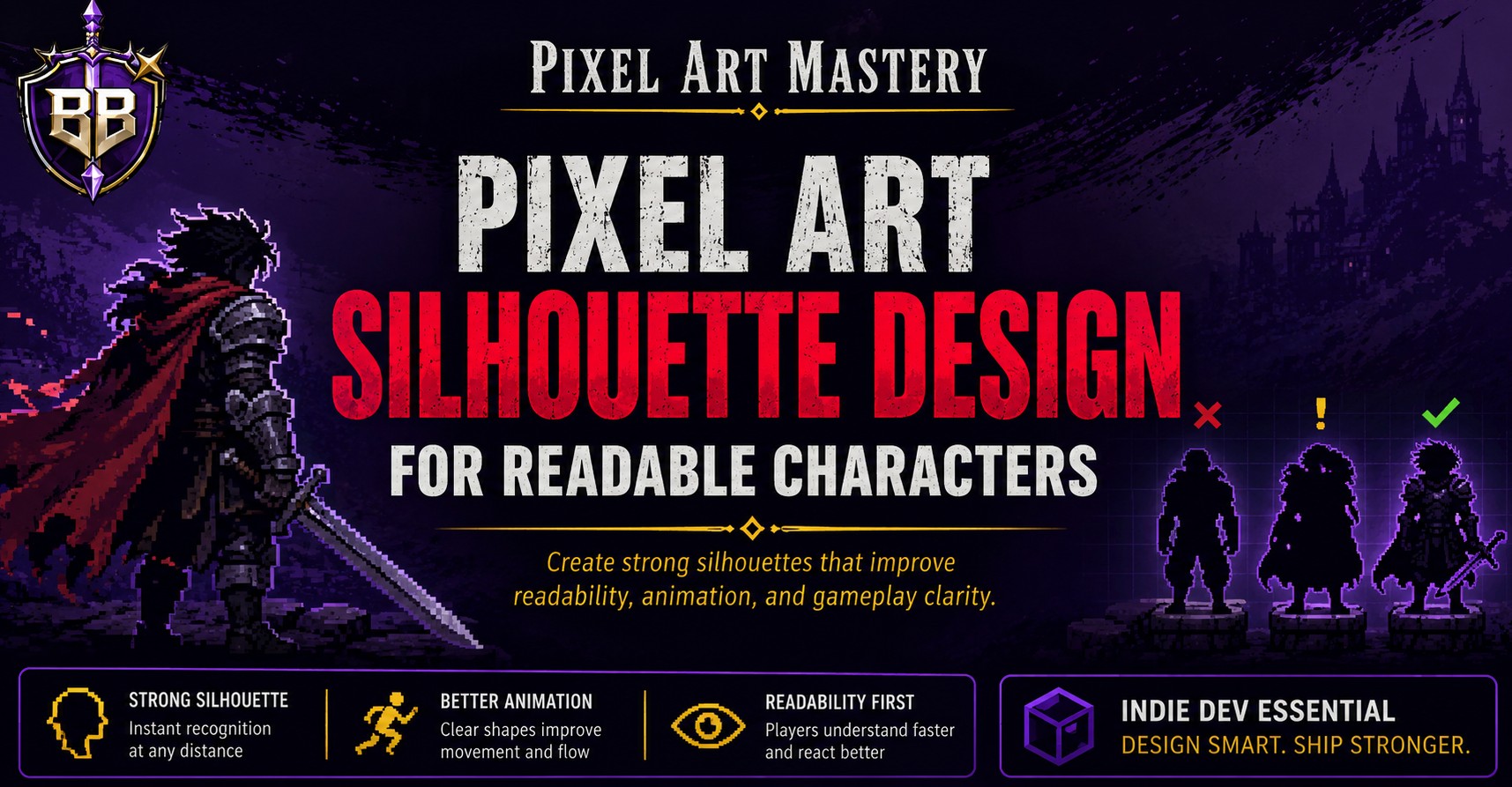
Pixel Art Silhouette Design: Why Readable Shapes Matter More Than Small Details
Good pixel art silhouette design often matters more than perfect shading, beautiful colors, or intricate details. If a player can recognize a character instantly while running, fighting, or standing against a busy background, the silhouette is already doing its job.
Many beginner pixel artists start by drawing eyes, armor decorations, belts, or clothing folds. Experienced artists usually work in the opposite direction: they first create a strong overall shape that remains recognizable even as a completely black figure. Details come later.
Whether you’re creating an RPG protagonist, a platformer enemy, or a boss encounter, silhouette readability is one of the biggest factors separating professional-looking sprites from designs that feel confusing in motion.
Quick Answer: What Is Pixel Art Silhouette Design?
Pixel art silhouette design is the process of creating a character whose overall outline communicates identity before any internal details become visible. The player should recognize the character through shape alone.
A successful silhouette answers several questions immediately:
- Is this a hero or an enemy?
- Is the character fast, heavy, old, young, agile, or powerful?
- Can the player distinguish this character from others at gameplay distance?
- Will the sprite remain readable during animation?
Why the Silhouette Comes Before Details
Players rarely inspect a sprite while standing still. During gameplay, characters move constantly, backgrounds change, particles appear, and combat effects compete for attention.
This means the brain identifies the largest visual information first:
- Overall shape
- Movement
- Color grouping
- Small details
If the silhouette fails, no amount of beautiful rendering can fully solve readability problems.
How Professional Pixel Artists Build Characters
| Stage | Goal |
|---|---|
| Silhouette | Create a recognizable outline. |
| Proportions | Balance head, torso, limbs, and equipment. |
| Animation | Test readability while moving. |
| Color Blocking | Separate important body regions. |
| Lighting | Add depth without breaking the shape. |
| Fine Details | Introduce accessories only if readability remains. |
Designing for Animation Instead of Static Artwork
A character that looks fantastic in a single frame may become difficult to read once animated. Every animation changes the outline, and that outline must stay recognizable throughout the motion.
For example:
- A cape should create a clear secondary shape without hiding the legs.
- Large hair should bounce subtly instead of constantly changing the head silhouette.
- Weapons should extend the character’s profile without making attack frames confusing.
- Hands should separate from the torso whenever possible during attacks.
These principles become increasingly important in action RPGs where players make split-second decisions.
Common Mistakes That Hurt Pixel Art Silhouette Design
Everything Has the Same Width
Characters become visually flat when shoulders, waist, legs, and arms all share similar proportions.
Too Many Tiny Accessories
Belts, pouches, necklaces, buckles, and cloth folds often disappear at gameplay resolution while adding unnecessary production time.
Symmetry Everywhere
Perfect symmetry makes many characters blend together. A shoulder pad, unique hairstyle, scarf, or weapon placement often creates stronger recognition.
Ignoring Gameplay Camera Distance
A sprite viewed at 400% zoom may look incredible, but players experience it at gameplay scale. Always test your silhouette at actual in-game resolution.
A Simple Workflow for Indie Developers
- Create the character using only one solid color.
- Reduce the canvas zoom until it matches gameplay size.
- Check whether the pose remains recognizable.
- Create an idle animation before adding details.
- Test the sprite against several background colors.
- Add lighting only after the silhouette succeeds.
- Introduce accessories one at a time and remove anything that hurts clarity.
This workflow reduces rework dramatically because animation problems become visible early instead of after hours of rendering.
Common Misconception
“More detail automatically makes better pixel art.”
Not necessarily. Better pixel art communicates information efficiently. A clean silhouette with intentional animation usually feels more polished than an overloaded design filled with tiny details that disappear during gameplay.
The Broken Build Perspective
One of the easiest traps in indie development is polishing before validating the design. Artists often spend hours perfecting clothing folds, highlights, or accessories before confirming whether the character is actually readable during gameplay.
Starting with silhouette-first design changes the entire production process. Animation becomes easier, enemies become easier to identify, visual consistency improves, and future costume variations take significantly less work.
This philosophy also supports stronger worldbuilding. A kingdom’s knights can share broad shoulder silhouettes, while forest hunters rely on lighter, narrower profiles. Players begin recognizing factions through shape language before they consciously notice colors or symbols.
For small teams, that efficiency matters. Every hour spent fixing readability late in production is an hour not spent creating new content.
Frequently Asked Questions
Should I start with color or silhouette?
Start with the silhouette. Color helps recognition, but shape remains readable even under different lighting conditions.
How many colors should I use early in production?
Begin with a single color. Add color groups only after the silhouette and proportions are working.
Does silhouette matter for top-down RPGs?
Absolutely. Even though characters are viewed from above, players still identify body proportions, hairstyles, weapons, and movement through the overall outline.
Can realistic designs still have strong silhouettes?
Yes. Strong silhouette design is independent of realism. Even realistic characters benefit from clear proportions and recognizable outlines.
Should every character have a unique silhouette?
Major characters should. Minor NPCs can share base proportions while using smaller variations to communicate different roles efficiently.
Why This Still Matters
Players rarely remember every texture, highlight, or decorative element on a sprite. They remember the shape charging toward them, the outline of a hero standing against the sunset, or the unmistakable profile of a boss before a difficult battle.
That is why pixel art silhouette design remains one of the most valuable skills an artist can develop. It improves gameplay clarity, strengthens visual identity, simplifies animation, and creates characters that stay memorable long after players put the controller down.