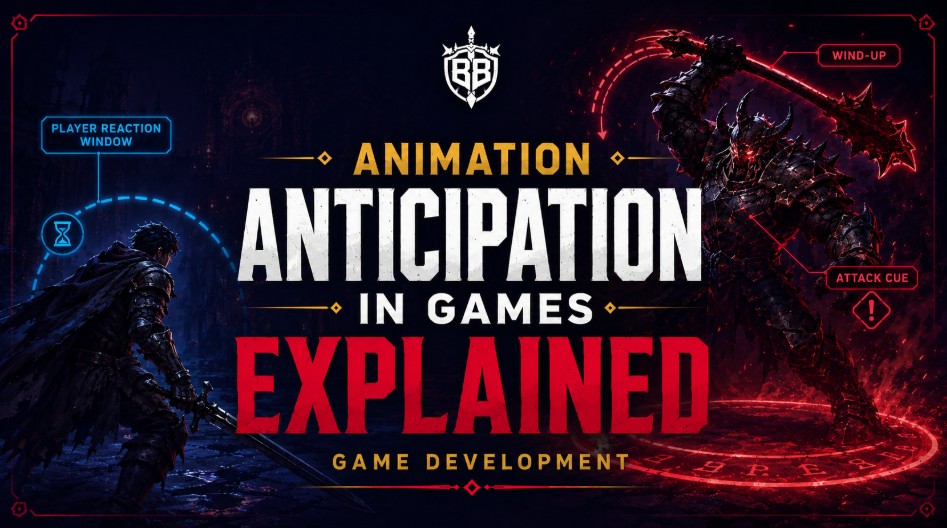
Animation Anticipation: Why Great Attacks Start Before They Move
Animation anticipation is one of the fundamental principles of game animation, yet players rarely notice it directly. Before a sword swings, a monster lunges, or a boss unleashes a devastating attack, the character almost always performs a subtle preparation. That brief movement gives the player time to understand what is about to happen.
Without anticipation, combat feels random. With it, even the fastest battles become readable, fair, and satisfying because players can react instead of simply hoping for the best.
Quick Answer: What Is Animation Anticipation?
Animation anticipation is the movement that happens immediately before the main action. It prepares both the animation and the player for what comes next by communicating direction, power, and timing.
For example, a warrior pulling a sword behind their shoulder before striking or a giant monster crouching before a leap are both examples of anticipation.
| Action | Anticipation | Player Learns |
|---|---|---|
| Sword Slash | Weapon pulled backward | Attack direction and timing |
| Jump Attack | Character crouches first | Vertical movement is coming |
| Magic Spell | Staff raises and begins glowing | Powerful ability incoming |
| Charge Attack | Enemy leans forward | Prepare to dodge sideways |
Why Animation Anticipation Matters
Players constantly make predictions. Every enemy movement is interpreted as information about what might happen next.
Animation anticipation makes those predictions possible. It creates a conversation between the game and the player where every attack begins with a warning instead of a surprise.
This improves both fairness and satisfaction without making combat easier.
Good Anticipation Creates Better Combat Readability
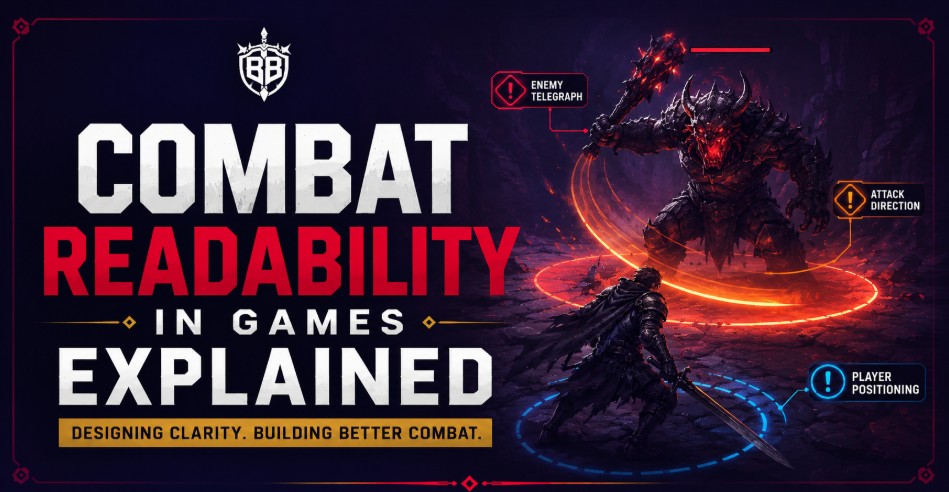
Combat readability depends on clear visual communication. Anticipation is one of its strongest tools because it naturally separates preparation from execution.
- Players recognize dangerous attacks sooner.
- Enemy patterns become easier to learn.
- Dodges feel earned rather than lucky.
- Boss fights become memorable through recognizable attack rhythms.
The best action games teach players through repeated anticipation rather than tutorials.
Small Animations Can Change the Entire Feel of Combat
Anticipation doesn’t need to be dramatic.
A slight shoulder rotation, a brief pause before a strike, a lowered stance, or a glowing weapon can communicate enough information for players to react naturally.
The purpose of anticipation isn’t realism. Its purpose is communication.
Common Misconception: Faster Animations Feel Better
Many beginners remove anticipation because they want attacks to feel quick and responsive.
Ironically, removing anticipation often makes combat feel worse. Players lose valuable visual information, attacks become difficult to read, and enemies begin feeling unfair instead of aggressive.
Speed is satisfying only when players understand what they’re seeing.
Practical Tips for Indie Developers
Strong anticipation doesn’t require complex animation.
- Push the character slightly away from the attack direction first.
- Give heavy attacks longer anticipation than light attacks.
- Keep anticipation silhouettes readable.
- Support major attacks with sound or lighting.
- Avoid making every attack begin with identical movement.
- Playtest without effects to see whether animations remain understandable.
Even pixel art games benefit enormously from anticipation because every frame carries more visual importance.
The Broken Build Perspective
Animation isn’t just about making characters move. It’s about helping players think.
At Broken Build, we see anticipation as one of the foundations of responsive combat. A beautifully animated attack that players can’t understand is less valuable than a simple animation that clearly communicates timing, direction, and danger.
For small indie teams, improving anticipation is often a better investment than adding more visual effects or more attack types. Better communication creates better gameplay.
FAQ
What is animation anticipation?
Animation anticipation is the preparation movement that happens before the main action, helping players understand what is about to occur.
Why is anticipation important in games?
It improves readability, fairness, and player reaction by giving visual cues before attacks or major actions begin.
Does every attack need anticipation?
Almost every meaningful attack benefits from some level of anticipation. The amount depends on how powerful or dangerous the attack is intended to be.
Can pixel art games use animation anticipation?
Absolutely. In pixel art, anticipation is often even more important because characters have fewer frames to communicate movement clearly.
Is anticipation the same as enemy telegraphs?
They are closely related. Animation anticipation is one form of telegraphing, using movement to warn players before an action happens.
Why Great Combat Begins Before the Hit
Players don’t fall in love with combat because attacks look fast—they remember combat because it feels understandable, responsive, and rewarding.
That experience often begins with a movement lasting only a handful of frames. Well-designed animation anticipation quietly teaches players what to expect, giving every dodge, parry, and successful counterattack a sense of purpose. It’s one of the smallest details in game development, yet it shapes nearly every memorable battle.