Enemy Telegraphs: Why Fair Combat Starts Before the Attack
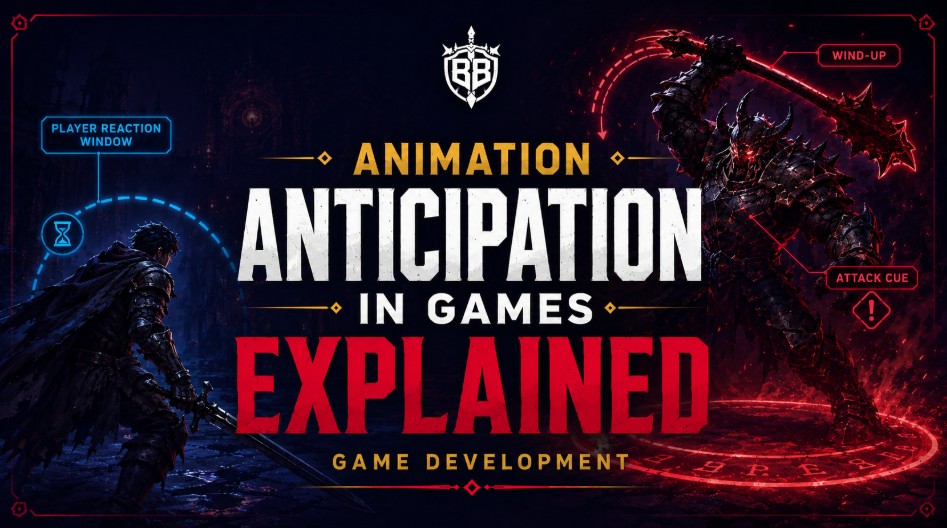
Enemy telegraphs are one of the most important—and most overlooked—parts of combat design. Long before an enemy lands a hit, the game communicates intent through animation, sound, movement, posture, lighting, or visual effects. These small signals give players a chance to react, transforming combat from random punishment into a skill they can learn and master.
Whether you’re building a fast-paced action RPG, a soulslike, or a boss-heavy indie game, strong telegraph design creates fairness without making encounters easy. The goal isn’t to remove difficulty—it is to make every defeat feel understandable.
Quick Answer: What Are Enemy Telegraphs?
Enemy telegraphs are visual, audio, or animation cues that indicate an attack before it happens. They give players information early enough to make a meaningful decision, such as dodging, blocking, interrupting, or repositioning.
| Telegraph Type | Example | Player Response |
|---|---|---|
| Animation | Enemy raises its weapon | Dodge or block |
| Audio | Monster roar or charging sound | Prepare defensive action |
| Visual Effect | Weapon glows before a special attack | Move away or interrupt |
| Movement | Enemy steps backward before lunging | Predict attack direction |
Why Good Combat Feels Fair
Players rarely complain about dying to a difficult boss when they understand why they failed. Frustration usually comes from attacks that feel impossible to read or impossible to avoid.
Good enemy telegraphs create a simple loop:
- The game communicates danger.
- The player recognizes the signal.
- The player reacts.
- The outcome reflects that decision.
Over time, this loop transforms memorization into mastery. Players begin reading enemies instead of merely surviving them.
Not Every Attack Needs the Same Telegraph
Different attacks deserve different levels of warning. A quick jab should not have the same preparation as a devastating area attack.
Generally speaking:
- Fast attacks use shorter telegraphs to maintain pressure.
- Heavy attacks should be easier to recognize because they carry greater consequences.
- Special abilities often combine animation, sound, and visual effects for extra clarity.
- Boss mechanics may intentionally evolve, asking players to recognize familiar patterns in new ways.
The Difference Between Surprise and Unfairness
A surprise attack can be exciting once. An unreadable attack becomes frustrating every time it appears.
Players enjoy discovering enemy patterns. They dislike feeling that success depends on guessing rather than learning.
Fair difficulty comes from asking players to observe carefully, not from hiding information they could never reasonably notice.
Common Telegraph Design Mistakes
The Wind-Up Is Too Short
If players cannot physically react after recognizing an animation, the telegraph may as well not exist.
Everything Looks the Same
When every attack begins with nearly identical movement, players cannot reliably predict what comes next.
Too Much Visual Noise
Particles, camera shake, damage numbers, and spell effects can accidentally hide the very animation players need to read.
No Audio Feedback
Sound helps players react even when their eyes are tracking something else on the battlefield.
What Indie Developers Can Learn
Enemy telegraphs are a high-value investment because they improve gameplay without requiring massive amounts of content.
A single enemy becomes far more interesting when its attacks are clearly readable and encourage different responses instead of relying on unpredictable damage.
During development, test encounters by asking:
- Can players identify each attack before it happens?
- Do different attacks have distinct silhouettes?
- Is there enough time to react?
- Can players explain why they were hit?
- Would removing particle effects make the attack easier to understand?
The Broken Build Perspective
Great combat is a conversation between the game and the player. Enemy telegraphs are the game’s way of speaking first.
Every animation, stance, glow, or roar tells a story about what is about to happen. When those signals are consistent, players stop feeling cheated and start feeling challenged.
For indie developers especially, readable combat often matters more than adding dozens of enemy types. A small roster with excellent telegraphs creates encounters players remember because they earned every victory.
FAQ
What are enemy telegraphs in games?
Enemy telegraphs are visual, audio, or movement cues that warn players before an attack occurs, allowing them to react appropriately.
Why are enemy telegraphs important?
They make combat feel fair by giving players information before dangerous actions happen, rewarding observation and skill rather than guessing.
Do difficult games need longer telegraphs?
Not necessarily. Difficult games can use short telegraphs, but they should still be readable and consistent enough for players to learn through experience.
Should every enemy have unique telegraphs?
Major enemies and bosses benefit from distinct telegraphs, while regular enemies can share visual language as long as their attacks remain recognizable.
Can sound replace visual telegraphs?
Sound works best alongside animation and movement. Combining multiple cues makes combat more accessible and easier to read under pressure.
Why Players Still Talk About Fair Boss Fights
The most memorable boss battles are rarely remembered because they dealt the most damage. They are remembered because players gradually learned their rhythm, recognized their patterns, and finally overcame them through observation and practice.
That journey begins with good enemy telegraphs. Before every dodge, counterattack, or narrow victory, the game gives players a chance to understand what is coming. When that communication is clear, every success feels earned—and every defeat becomes another lesson rather than a reason to quit.