Quest 64: The Nintendo 64 RPG That Tried to Bring Classic Adventure Into Early 3D
Affiliate disclosure: this article contains affiliate links. If you buy through them, Broken Build Studios may earn a small commission at no extra cost to you.
Quest 64 is one of the most unusual RPGs in the Nintendo 64 library. Released during a generation where role-playing games were becoming more cinematic, more complex, and more story-driven, this game took a simpler path: a lone young mage, a colorful fantasy world, and a combat system built around elemental magic.
For many players, Quest 64 is not remembered as a perfect RPG. It is remembered as a strange, nostalgic, and sometimes misunderstood experiment from an era when developers were still learning how traditional console RPGs could work in 3D.
Why Quest 64 Mattered on the Nintendo 64
The Nintendo 64 was not exactly known as the strongest home for traditional RPGs. While other platforms were receiving story-heavy adventures with large casts, complex systems, and cinematic presentation, Nintendo’s console leaned more heavily into platformers, action games, racing games, and multiplayer experiences.
That is part of what makes Quest 64 interesting. It arrived as one of the console’s early attempts to give players a true RPG experience, even if the result was simpler than what many fans expected. Instead of a full party, branching character drama, or a dense equipment system, the game focused on one protagonist and a magic-based progression structure.
Quest 64 and Its Elemental Magic System
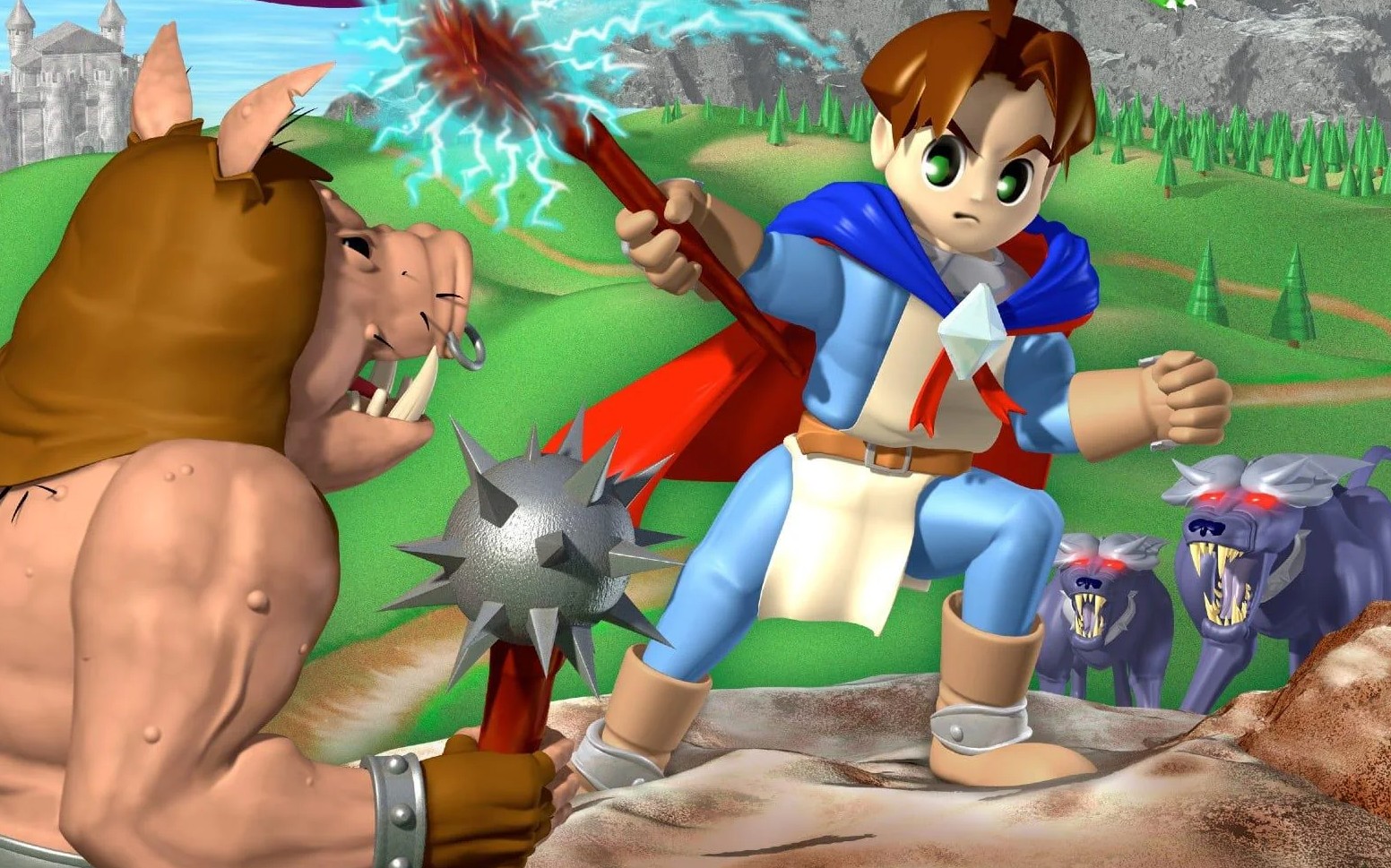
The most memorable part of Quest 64 is its elemental magic system. The player controls Brian, an apprentice mage, and builds his power around four elements: fire, water, earth, and wind.
Instead of feeling like a standard sword-and-shield RPG, the game places magic at the center of combat. This gives it a distinct identity. Each element changes how the player approaches battles, and the progression system encourages experimentation with different magical paths.
From a game design perspective, that idea still has value. A focused magic system can give an RPG a strong mechanical personality, even when the rest of the game is structurally simple. Quest 64 may not have the deepest combat of its generation, but it understood the importance of giving the player a clear magical identity.
How Quest 64 Felt Different From Other RPGs of Its Time
Compared to many RPGs from the late 1990s, Quest 64 feels quiet, direct, and almost lonely. There is no large party traveling with the hero. There is no constant stream of dramatic cutscenes. The player moves through towns, fields, forests, and dungeons with a sense of isolation that can feel empty to some players, but strangely atmospheric to others.
This is where the game becomes more interesting than its reputation suggests. Its limitations create a very specific mood. The world can feel sparse, but that sparseness also gives the adventure a dreamlike quality. It feels like an old fantasy book translated into early 3D, with simple shapes, bright colors, and a sense of mystery around every new area.
Quest 64 as an Early 3D RPG Experiment
Looking back, Quest 64 works best when viewed as an experiment. The late 1990s were a transitional period for RPGs. Developers were still figuring out camera angles, 3D movement, battle spaces, world design, and how to translate older 2D design traditions into polygonal environments.
In that context, the game becomes a useful case study. It shows both the promise and the difficulty of early 3D RPG development. The combat arenas, simple exploration, and magic progression all point toward ideas that could have been expanded further with more time, stronger storytelling, and deeper systems.
What Worked
The game’s strongest ideas come from its focused identity. It gives the player one mage, one journey, and one core progression system. The elemental magic creates a recognizable structure, and the 3D environments helped make the adventure feel different from the 16-bit RPGs that came before it.
What Felt Limited
At the same time, Quest 64 can feel underdeveloped. The story is simple, the character development is light, and the world does not always reward exploration in the way many RPG players expect. For players who came from deeper RPGs, those limitations were hard to ignore.
Why Quest 64 Still Has Nostalgic Value
Nostalgia does not always come from perfect games. Sometimes it comes from games that arrived at the right time, on the right console, with the right visual identity. For many players, Quest 64 was their first real attempt at experiencing an RPG on the Nintendo 64.
That matters. Even flawed games can shape taste, memory, and creative curiosity. A player might remember the magic system, the strange atmosphere, the empty roads, the early 3D towns, or simply the feeling of discovering something different in a console library that did not have many games like it.
For Broken Build Studios, that is the kind of game worth revisiting. Not because it needs to be defended as a masterpiece, but because it reveals something about RPG history, console identity, and the value of imperfect design ideas.
What Game Developers Can Learn From Quest 64
For indie developers and RPG designers, Quest 64 offers a useful lesson: a game does not need to be complex in every area, but it does need a strong central identity.
The elemental system is the heart of the experience. Even if other areas feel thin, that central idea gives the game something players can remember. In modern indie RPG development, this is still important. A small team may not be able to build a massive world or a huge cast, but it can build a focused system that gives the game its own voice.
A Clear System Can Carry a Simple Adventure
When an RPG has a clear mechanical hook, players are more likely to remember it. In Quest 64, that hook is elemental magic. In another game, it might be formation, timing, character bonds, terrain, crafting, or risk-based combat.
The important part is focus. A smaller RPG can still feel meaningful when its systems support the fantasy of the character and the world.
A Personal Connection to Quest 64
My connection with Quest 64 started in a funny way. People used to tell me that I looked like the protagonist, and that was actually how I discovered the game.
That kind of memory gives the game a different weight. Sometimes we do not find games because of reviews, marketing, or rankings. Sometimes we find them through a small personal connection, a joke, a resemblance, or a moment that makes us curious enough to try something new.
That is part of why games like this stay with us. Even when they are imperfect, they become attached to a specific period of life, a console, a visual style, or a simple memory that refuses to disappear.
Why Quest 64 Is Still Worth Remembering
Quest 64 is not the most complete RPG of the Nintendo 64 era, but it is one of the most curious. It represents a moment when the genre was changing, when 3D worlds were still new, and when developers were taking risks with limited tools and uncertain expectations.
Its flaws are visible, but so are its ideas. The elemental magic, the quiet world, the early 3D fantasy atmosphere, and its unusual position in the console’s library make it worth revisiting from both a nostalgic and analytical perspective.
For players who enjoy RPG history, early 3D game design, or strange console experiments, Quest 64 remains a fascinating piece of the Nintendo 64 story. It may not be flawless, but it has a personality that many technically stronger games never managed to leave behind.
If you enjoy revisiting unusual RPGs from the Nintendo 64 era, Quest 64 is still a game worth looking back on with curiosity, patience, and a little nostalgia.