Affiliate disclosure: this article contains affiliate links. If you buy through them, Broken Build Studios may earn a small commission at no extra cost to you.
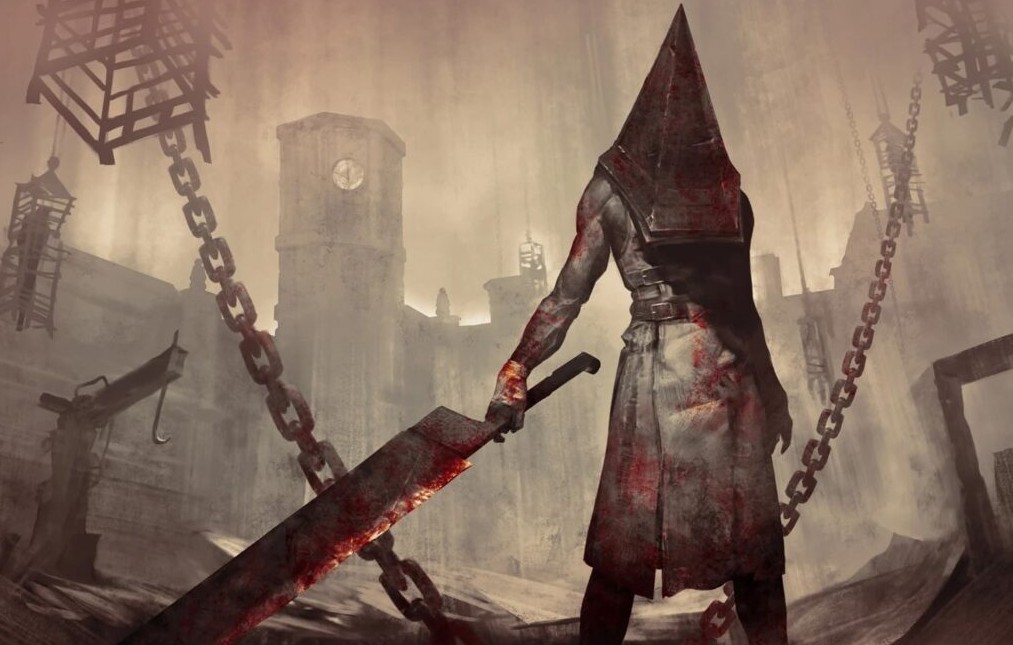
Pyramid Head is more than a monster. In Silent Hill 2, he functions as a psychological symbol, a narrative device, and a manifestation of the protagonist’s deepest guilt. Few horror game characters have generated as much discussion among players, lore enthusiasts, and game designers. Understanding Pyramid Head means understanding why Silent Hill 2 remains one of the most influential psychological horror games ever created.
While many horror antagonists exist to chase or kill the player, Pyramid Head serves a different purpose. His presence is directly tied to the themes of punishment, repression, self-judgment, and emotional trauma that drive the game’s narrative.
For players revisiting the franchise or discovering it for the first time, Silent Hill 2 remains one of the most compelling experiences available. Those interested in exploring the series can check current editions and related products here: Silent Hill Collection and Related Games.
Who Is Pyramid Head in Silent Hill?
Pyramid Head first appeared in Silent Hill 2, released by Konami in 2001. Unlike recurring franchise villains found in many horror series, Pyramid Head was originally designed specifically for James Sunderland’s story.
Within the game’s narrative, James arrives in Silent Hill after receiving a mysterious letter from his deceased wife, Mary. As he explores the fog-covered town, he encounters increasingly disturbing manifestations that appear connected to his subconscious.
Pyramid Head stands apart from these creatures because he feels deliberate. He is not merely another monster roaming the town. He appears at crucial moments, acting almost like an executioner carrying out a punishment that James unconsciously believes he deserves.
What Does Pyramid Head Symbolize?
The most widely accepted interpretation is that Pyramid Head represents guilt and self-inflicted punishment.
Silent Hill’s supernatural nature often transforms internal psychological struggles into physical reality. In James Sunderland’s case, his unresolved emotions create manifestations that force him to confront truths he desperately wants to avoid.
Pyramid Head embodies:
- Guilt over past actions
- Self-punishment
- Repressed memories
- Psychological torment
- The inevitability of truth
Rather than serving as an external threat, he functions as an extension of James himself. Every appearance reinforces the idea that James cannot escape his own conscience.
Possible Real-World Inspirations Behind Pyramid Head
Masahiro Ito, the creature designer behind Pyramid Head, created a design that feels simultaneously human and inhuman. Several artistic and historical influences are often discussed by fans and researchers.
Executioners and Medieval Punishment
The oversized metal helmet resembles an executioner’s hood transformed into a brutal geometric shape. The imagery evokes public punishment, judgment, and suffering.
This connection reinforces Pyramid Head’s role as an enforcer of consequences rather than a traditional monster.
Industrial Horror and Surreal Art
Silent Hill’s visual identity frequently draws from industrial environments, decaying architecture, and surrealist imagery.
Pyramid Head’s rusted appearance feels like a living extension of the town itself, blending machinery, flesh, and nightmare logic into a single figure.
Psychological Horror Traditions
Unlike creatures inspired by folklore or mythology, Pyramid Head follows a psychological horror tradition where monsters represent emotional states and internal conflicts.
This design philosophy influenced countless later horror games that use symbolic enemies instead of purely physical threats.

Why Is Pyramid Head So Important to Silent Hill 2’s Narrative?
Pyramid Head is essential because he transforms the story from a simple mystery into a character study.
Without him, James Sunderland’s journey would largely consist of exploration and discovery. Pyramid Head creates direct confrontation between the protagonist and the truths hidden within his subconscious.
Every encounter escalates the narrative tension. His appearances signal that James is moving closer to understanding himself.
In game design terms, Pyramid Head represents a rare example of narrative integration where character symbolism, gameplay encounters, visual design, and thematic storytelling all support the same central idea.
How Pyramid Head Changed Horror Game Design
Pyramid Head’s influence extends far beyond Silent Hill.
Many modern horror games adopted similar approaches to monster design, where creatures symbolize psychological conditions, trauma, or personal fears rather than existing solely as enemies.
His legacy can be seen in discussions surrounding:
- Narrative-driven horror
- Psychological storytelling
- Environmental worldbuilding
- Symbolic enemy design
- Character-focused horror experiences
The character demonstrated that horror becomes more effective when threats reflect the player’s emotional understanding of the story.
Connections to Broader RPG and Narrative Design Concepts
Although Silent Hill 2 is not a traditional RPG, its storytelling shares several strengths found in the genre.
Like the best RPGs, the game uses character development as its foundation. James undergoes a form of psychological progression rather than gaining levels or abilities.
The town itself functions almost like an evolving worldbuilding system. Locations reveal pieces of narrative context, environmental storytelling reinforces emotional themes, and enemy encounters communicate character psychology.
This approach influenced later narrative-focused games that blend exploration, lore analysis, character writing, and environmental storytelling into cohesive experiences.
FAQ
Is Pyramid Head evil?
Not in the traditional sense. He is generally interpreted as a manifestation of James Sunderland’s guilt and desire for punishment rather than an independently evil character.
Why does Pyramid Head wear a pyramid-shaped helmet?
The design evokes executioners, punishment, and distorted authority. It also creates an unsettling, inhuman silhouette that became instantly recognizable.
Does Pyramid Head appear in other Silent Hill games?
Yes, but many fans view his appearance outside Silent Hill 2 as less impactful because his original symbolism was closely tied to James Sunderland’s personal story.
Who designed Pyramid Head?
Pyramid Head was designed by Masahiro Ito, one of the key artists responsible for Silent Hill’s iconic creature designs.
Why is Pyramid Head considered one of gaming’s greatest monsters?
Because he combines memorable visual design, deep symbolism, psychological meaning, and narrative relevance in a way few video game antagonists have achieved.
The Enduring Power of Silent Hill’s Most Iconic Symbol
More than two decades after his debut, Pyramid Head remains one of the strongest examples of symbolic character design in gaming. His importance comes not from how many enemies he defeats or how often he appears, but from what he represents.
He transforms Silent Hill 2 from a horror story into a deeply personal examination of guilt, memory, and self-judgment. That combination of visual impact and narrative purpose is why players continue discussing him years later.
If Silent Hill’s greatest achievement was turning psychological horror into interactive storytelling, Pyramid Head remains its most unforgettable expression. For fans looking to revisit the series or explore its legacy, browse available editions and related products here: Explore Silent Hill Games and Collectibles.