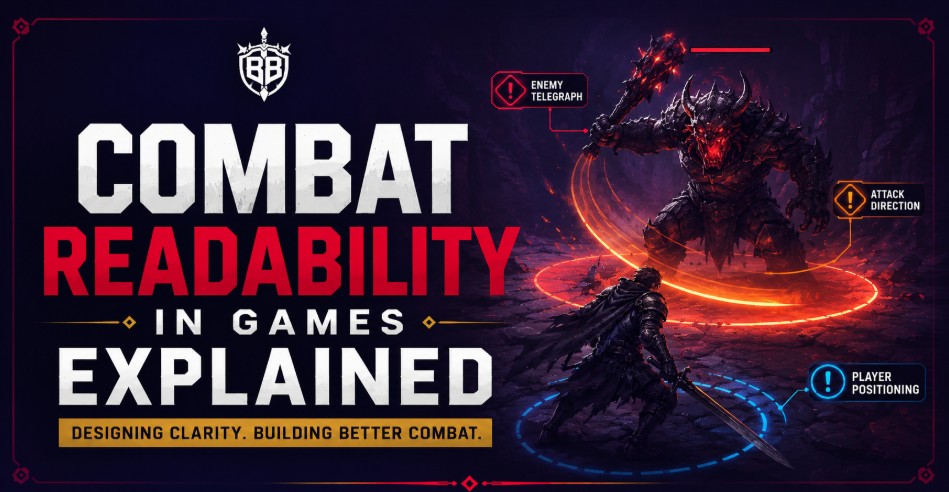
Combat Readability: The Invisible Design Rule Behind Great Action Games
Combat readability is one of the biggest reasons why some games feel responsive, fair, and satisfying while others feel confusing or frustrating. Players don’t consciously think about readability—they simply notice whether they understand what’s happening before making their next decision.
Good combat isn’t just about animations, particle effects, or flashy abilities. It depends on clear communication between the game and the player. Every attack, dodge, spell, and enemy movement should provide information that players can recognize, process, and respond to in real time.
Quick Answer: What Is Combat Readability?
Combat readability is how clearly a game communicates important gameplay information during battle. Players should immediately understand enemy intentions, attack ranges, dangerous areas, animations, and their own available options without unnecessary confusion.
| Design Element | Why It Matters |
|---|---|
| Enemy Animations | Players recognize attacks before impact. |
| Silhouettes | Characters remain recognizable during action. |
| Visual Effects | Highlight important events without hiding gameplay. |
| UI Feedback | Supports player decisions without overwhelming the screen. |
Why Combat Readability Matters More Than Visual Detail
Many developers assume better graphics automatically improve combat. In reality, highly detailed visuals can reduce clarity if they hide important gameplay information.
An attack covered by excessive particles, camera shake, or overlapping effects becomes difficult to read. Players aren’t reacting to the enemy anymore—they’re reacting to visual noise.
Great combat prioritizes communication first and spectacle second.
The Four Pillars of Combat Readability
1. Clear Silhouettes
Players should recognize enemies and allies instantly, even from a distance. Distinct body shapes matter more than tiny visual details during active gameplay.
2. Consistent Animations
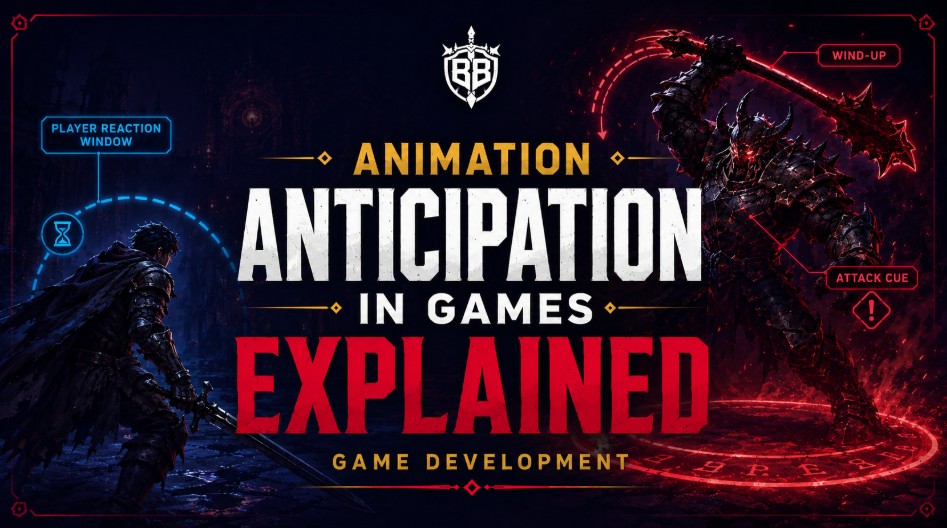
Every attack should have a readable beginning, execution, and recovery. Consistent animation timing helps players naturally learn enemy behavior.
3. Controlled Visual Effects
Explosions, magic, and lighting should reinforce important gameplay moments—not cover them.
4. Immediate Feedback
Hits, blocks, dodges, and successful actions should feel unmistakable through animation, sound, and visual response.
Common Misconception: More Effects Mean Better Combat
Players don’t need more information—they need the right information presented at the right time.
Many games become harder to understand not because enemies are smarter, but because every spell, hit effect, UI notification, and particle system competes for the player’s attention.
Practical Advice for Indie Developers
Combat readability doesn’t require expensive graphics. Small teams can dramatically improve combat by focusing on communication.
- Test encounters with particle effects disabled.
- Check whether enemies remain recognizable in motion.
- Give heavy attacks longer preparation animations.
- Limit overlapping visual effects during boss fights.
- Keep UI elements informative but unobtrusive.
- Use contrasting colors for dangerous attacks.
- Watch playtesters without explaining mechanics.
If players consistently understand what happened—even when they lose—your readability is probably working.
How Readability Improves Difficulty
Difficulty and fairness are not opposites.
Players often accept extremely difficult encounters if they believe every mistake was understandable. Combat readability creates that confidence by making outcomes feel earned instead of random.
When players clearly see an attack coming, every successful dodge feels rewarding, and every mistake becomes an opportunity to improve.
The Broken Build Perspective
At Broken Build, we believe great combat begins with communication. Before balancing damage numbers, adding new abilities, or increasing enemy variety, developers should ask one simple question:
“Can the player understand what’s happening?”
Combat readability connects animation, level design, visual effects, audio, UI, and enemy behavior into one cohesive experience. When every system communicates clearly, players stop fighting the interface and start mastering the game itself.
FAQ
What is combat readability?
Combat readability is the clarity with which a game communicates attacks, animations, hazards, and player feedback during combat.
Why is combat readability important?
It helps players make informed decisions, making difficult encounters feel fair and rewarding instead of confusing.
Can pixel art games have excellent combat readability?
Yes. Strong silhouettes, limited colors, clear animation timing, and consistent visual language often make pixel art games exceptionally readable.
Does realistic graphics improve readability?
Not automatically. Highly detailed visuals can reduce readability if they obscure important gameplay information.
How can developers test combat readability?
Playtesting is the best method. Watch whether new players can recognize attacks, understand enemy behavior, and explain why they succeeded or failed without outside guidance.
Why Players Remember Games That Feel Fair
Players rarely praise combat readability directly. Instead, they describe games as “responsive,” “tight,” “fair,” or “rewarding.” Those compliments often stem from the same invisible foundation.
Excellent combat readability allows players to focus on making decisions rather than decoding information. That invisible clarity is what transforms a good combat system into one players continue talking about long after the credits roll.