Affiliate disclosure: this article contains affiliate links. If you buy through them, Broken Build Studios may earn a small commission at no extra cost to you.
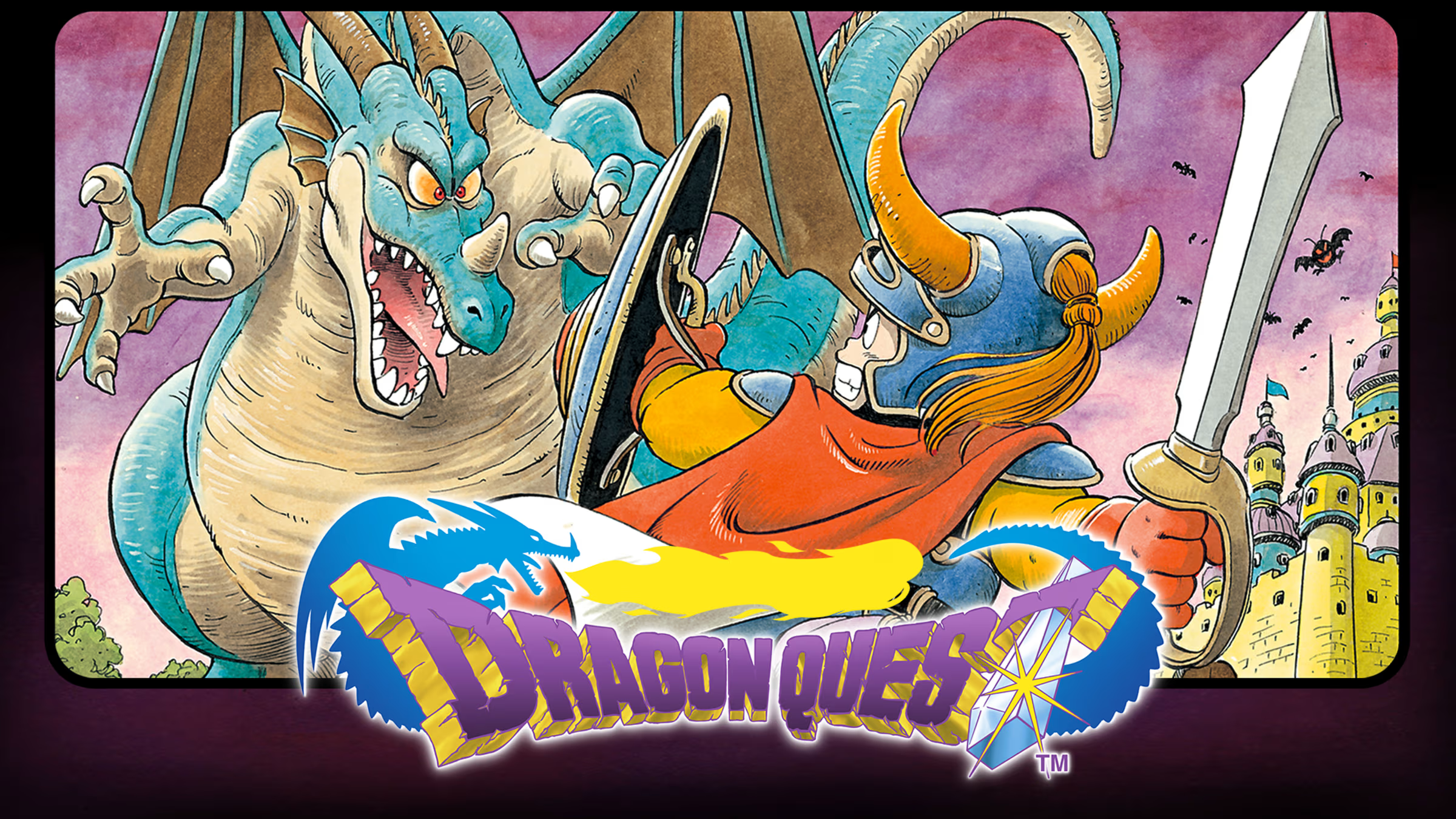
Dragon Quest was a turning point for early RPGs because it took ideas that were already present in computer role-playing games and made them easier to understand, easier to play, and easier to fall in love with on a home console.
Today, it can look extremely simple. One hero. One enemy at a time. A small world. Basic commands. Clear progression. But that simplicity is exactly why Dragon Quest mattered so much. It translated the feeling of adventure, growth, danger, and discovery into a format that many players could finally approach without feeling lost.
Why Dragon Quest Was Different for Its Time
Before Dragon Quest, many RPGs were associated with computers, complex interfaces, dense systems, and a slower learning curve. Those games were important, but they were not always friendly to a wider audience.
Dragon Quest helped change that by presenting the RPG formula in a cleaner way. It gave players a clear objective, understandable combat, visible character growth, towns to explore, equipment to buy, monsters to defeat, and a world that slowly opened up as the hero became stronger.
That may sound basic now, but for its time, this structure helped define what many players would come to expect from console RPGs.
A Simple Structure With Huge Impact
The beauty of Dragon Quest is that almost every part of the game supports the same feeling: you start weak, you learn the world, you prepare, and you slowly become capable of facing threats that once felt impossible.
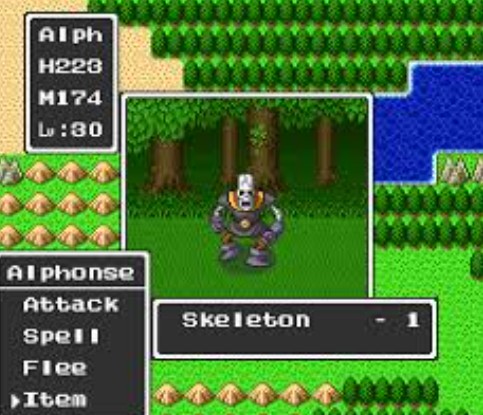
The game does not overwhelm the player with a massive party, advanced skill systems, or complicated branching paths. Instead, it focuses on the core loop that still defines many RPGs today:
Explore the world.
Fight monsters.
Earn experience.
Buy better equipment.
Survive longer.
Reach new places.
Become stronger.
That loop is powerful because it creates a direct connection between effort and progress. Every battle matters. Every new weapon feels meaningful. Every dangerous area becomes a test of how well the player has prepared.
Dragon Quest Helped Define Console RPG Language
One of the biggest reasons Dragon Quest became so important is that it helped establish a language for RPGs on consoles. Players learned how towns worked, how NPC hints mattered, why equipment upgrades were important, and how exploration could be tied to character growth.
The NES / Famicom generation needed games that could teach deep systems through simple presentation. Dragon Quest did that extremely well. It made the RPG feel less like a niche computer experience and more like an adventure anyone could start.
It was not just about mechanics. It was about clarity. The player always had a sense of direction, even when the world still felt mysterious. That balance between accessibility and adventure is one of the reasons the game had such a lasting impact.
The Importance of Progression
Progression is one of the strongest parts of early RPG design, and Dragon Quest understood that clearly.
At the start, even basic monsters can be dangerous. The player has to respect the world. Moving too far too early can lead to defeat. But after gaining levels, earning gold, and improving equipment, those same areas begin to feel manageable.
That emotional shift is important. The game makes the player feel growth directly. You are not just told that the hero is stronger. You experience it through survival, confidence, and access to new parts of the world.
This is one of the reasons I still respect the game. A strong RPG does not always need dozens of systems. Sometimes, a dangerous world and a clear sense of growth are enough.
Why Dragon Quest Still Matters Today
Looking back, Dragon Quest matters because it reminds us that foundation is everything. Many modern RPGs are bigger, faster, prettier, and more complex, but they still rely on ideas that games like this helped popularize.
The town as a safe space. The overworld as a dangerous unknown. The satisfaction of buying a stronger weapon. The tension of being far from healing. The joy of finally defeating something that once felt impossible. These are old ideas, but they are still powerful.
For indie developers, especially those building turn-based RPGs, Dragon Quest is a useful reminder: clarity can be stronger than complexity. A game does not need to explain everything through long tutorials if its systems naturally teach the player through play.
My Personal Connection With Dragon Quest
I love Dragon Quest because it was one of the first RPGs I ever touched in my life. Even though it is simple compared to modern RPGs, it gave me that early feeling of adventure, danger, progression, and discovery that made me fall in love with the genre.
There is something special about a game that can feel small on the surface but huge in memory. Dragon Quest is that kind of game for me. It is not just an old RPG. It is part of the reason I care so much about turn-based combat, exploration, and the feeling of slowly becoming stronger.
Final Thoughts
Dragon Quest was a turning point because it helped make RPGs more accessible without removing the sense of adventure that made the genre special. It created a clear structure, taught players through progression, and helped define the language of console RPGs.
For its time, it was more than just a simple fantasy adventure. It was a blueprint. And for players like me, it was an introduction to a type of game that would leave a permanent mark.