“`html
Palworld Dark Lore Explained: What Hides Behind the Cute Pals
Palworld dark lore is not built around one shocking revelation. It emerges from the way the entire world treats Pals: as companions, workers, weapons, merchandise, research material, and occasionally food. Beneath the colorful creature designs is a civilization that has normalized turning living beings into resources.
The ruins scattered across Palpagos, the morally compromised factions, Victor Ashford’s genetic research, and the mystery surrounding the World Tree suggest that this cycle did not begin with the player. Palpagos has already watched at least one advanced civilization rise, depend on Pals, and disappear.
Spoiler warning: this article discusses faction journals, environmental storytelling, the World Tree, and major themes from Palworld Version 1.0.
Affiliate disclosure: this article contains affiliate links. If you buy through them, Broken Build Games may earn a small commission at no extra cost to you.
What Is Palworld’s Dark Lore?
Palworld’s dark lore is the story of a society built on an unresolved contradiction. Humans depend on Pals for transportation, construction, farming, industry, combat, medicine, and survival, yet rarely treat them as equals.
Every major group on Palpagos claims to understand the correct relationship between humans and Pals. The Rayne Syndicate profits from capturing them. The Free Pal Alliance claims to protect them. The Pal Genetic Research Unit tries to redesign them. Other factions turn them into military, religious, or political power.
The uncomfortable part is that the player participates in the same system. Capturing Pals is necessary for progression. Assigning them to repetitive work improves production. Breeding them can optimize statistics. Condensing multiple Pals can strengthen a chosen one.
Palworld does not place its darkest ideas in a villain’s speech. It places them inside the progression loop and asks how efficiently the player will use them.
The Palpagos Islands May Be Deliberately Hidden
The Castaway’s journals establish that Palpagos is more than a remote group of islands. Before arriving, the writer notices what appears to be an unexplained empty area while studying the world’s geography. Once on Palpagos, the Castaway also questions why an enormous structure like the World Tree cannot be seen from outside the islands.
The journal does not provide a definitive explanation. However, it strongly implies that some force prevents the outside world from properly seeing, mapping, or reaching Palpagos.
That isolation changes the meaning of the setting. Palpagos is not simply unexplored wilderness. It resembles a sealed environment where unusual technology, unstable factions, aggressive Pals, and the remains of a lost civilization have developed without meaningful outside oversight.
It also helps explain why people who reach the islands rarely seem to leave. Castaways arrive, adapt, build settlements, join factions, and become part of the same struggle that consumed the people before them.
The Ancient Civilization and Its Unexplained Collapse
Ancient ruins are visible throughout Palpagos, but the people who built them are gone. Their structures, inscriptions, towers, and technological remains suggest a society that had developed an advanced understanding of Pals.
The Castaway uses inscriptions found in the ruins to improve Pal Sphere technology and manage captured Pals more efficiently. This suggests that systems resembling modern Pal storage and transportation were already known by the ancient civilization.
The important mystery is not whether the civilization worked with Pals. The journals make that dependence appear likely. The mystery is why such a powerful society disappeared.
| Lore Element | What the Game Establishes | What Remains Unclear |
|---|---|---|
| Ancient ruins | A technologically capable society once occupied Palpagos. | The exact cause of its disappearance. |
| Pal inscriptions | Ancient knowledge can improve the storage and management of Pals. | Whether that technology contributed to the civilization’s collapse. |
| The towers | Tower structures are connected to Palpagos’ most powerful factions and central progression. | Their complete original purpose and relationship with the ancient world. |
| The World Tree | It is central to Palpagos’ isolation, history, and Version 1.0 storyline. | How much of its true nature has been fully understood by the island’s inhabitants. |
A careful interpretation is that Palpagos is trapped in a repeating pattern. Each civilization discovers how useful Pals can be. That usefulness becomes dependence. Dependence becomes control, experimentation, territorial conflict, and increasingly dangerous technology.
This interpretation is not a confirmed explanation for the ancient collapse, but it fits the world the player inherits.
Why Pals Are Stranger Than Ordinary Animals
Pals do not behave like ordinary wildlife. They possess elemental abilities, understand complex work, interact with advanced technology, and can be transformed into light inside Pal Spheres.
The Castaway’s observations make their biology even more mysterious. Eggs appear under conditions that do not resemble conventional animal reproduction, while defeated Pals can disappear rather than leaving a normal biological remains. The journals openly question where Pals come from and where they go.
These details matter because they prevent Pals from being understood as simple fantasy animals. They appear connected to the deeper rules governing Palpagos itself.
- Pals can be converted into energy-like forms by Pal Spheres.
- Many possess enough intelligence to complete specialized work.
- Their elemental powers can influence the environment and human technology.
- Their reproduction and disappearance raise questions that the game has not completely resolved.
- Ancient and modern civilizations both appear dependent on them.
The game therefore creates a disturbing uncertainty: humanity uses Pals on an industrial scale without fully understanding what they are.
The Factions Show Different Forms of Exploitation
Palworld’s factions are not merely groups of enemies assigned to different biomes. Each represents an ideology about who should control Pals and what that control should accomplish.
| Faction | Public Identity | Dark Contradiction |
|---|---|---|
| Rayne Syndicate | An organized group surviving through force, capture, and illegal trade. | Pals become inventory, while vulnerable people can also become trapped inside the organization. |
| Free Pal Alliance | A movement that condemns human domination of Pals. | Its moral certainty can become fanaticism, hostility, and another form of coercive power. |
| Brothers of the Eternal Pyre | A group organized around fire, devotion, and strength. | Spiritual identity becomes inseparable from territorial conflict and violence. |
| PIDF | An armed organization that presents itself as law and order. | Authority often appears focused on control and self-preservation rather than consistent justice. |
| Pal Genetic Research Unit | A scientific organization studying Pal genetics. | Research treats living creatures as material for creating stronger and more controllable lifeforms. |
Zoe and Grizzbolt Complicate the Rayne Syndicate
Zoe Rayne is introduced as an early tower boss and the leader of the Rayne Syndicate. Her journals, however, reveal a more vulnerable connection with Grizzbolt.
Zoe recognizes herself in the captured Pal’s loneliness. Their partnership grows from shared isolation rather than simple ownership. This does not erase the actions of the Syndicate, but it prevents Zoe from being reduced to a disposable criminal boss.
Her story suggests that even people raised inside abusive systems can form sincere bonds. The tragedy is that those bonds do not automatically free them from the system itself.
Lily’s Compassion Can Become Extremism
Lily Everhart describes Pals as noble beings that have supported civilization since ancient times. She condemns the use of Pal Spheres, forced labor, unnecessary consumption, and the human desire to dominate other species.
Her criticism is one of the clearest moral arguments in Palworld. The player has already seen Pals imprisoned, sold, overworked, and attacked. Lily is not wrong to recognize that exploitation.
The darker element is her absolute division between virtuous Pals and corrupt humans. Once a movement views one side as naturally pure and the other as fundamentally disgusting, protection can turn into fanaticism.
Palworld uses Lily to show that opposing exploitation does not automatically make an organization fair, peaceful, or immune to hypocrisy.
Victor Ashford and the Creation of Controlled Life
Victor Ashford represents Palworld’s most direct form of scientific horror. As the leader of the Pal Genetic Research Unit, he approaches Pals as collections of useful genetic information.
His research is not primarily motivated by understanding Pals as living beings. It is directed toward improvement, optimization, and the creation of a superior lifeform. Shadowbeak, his artificially enhanced partner, becomes the visible result of that ambition.
Victor’s work is the logical endpoint of the same mindset used by factories and criminal organizations. Once a Pal is defined only by usefulness, changing its body to produce a better result becomes another production decision.
What Players Often Get Wrong About Palworld’s Dark Lore
One popular theory claims that every Pal is secretly a genetically altered human. The theory draws attention to Pal intelligence, strange biology, genetic experiments, and the uncertain relationship between humans and Pals.
The game does not confirm this as canon.
Palworld establishes that genetic manipulation exists and that researchers have attempted to create or enhance powerful Pals. It does not establish that the entire species originated from transformed humans.
The distinction matters because the confirmed mystery is already significant. Humans have built a civilization around creatures whose origin, biology, disappearance, and connection to Palpagos remain only partially understood.
Calling the human-transformation theory confirmed would replace an interesting unresolved question with an answer the game has not actually provided.
The World Tree Is More Than a Distant Landmark
During Palworld’s Early Access period, the World Tree functioned as an unreachable promise. It was visible from across the map but separated from the player, reinforcing the feeling that the accessible islands represented only part of a larger mystery.
Version 1.0 turned the World Tree into a central story destination and connected it more directly to Palpagos’ ancient history, expanded regions, and new threat.
Symbolically, the tree works because almost every part of Palworld leads back to questions of origin and dependence. Humans rely on Pals. Pals appear connected to the island’s unusual natural laws. Ancient technology surrounds them. The towers organize political power around them.
The World Tree stands above those systems like a physical representation of the truth everyone can see but few people understand.
Its importance also supports the idea that Palpagos is not just a collection of biomes. The islands function more like a closed ecosystem shaped by an old event whose consequences still determine how humans and Pals live.
How Palworld’s Dark Lore Changes the Gameplay
Palworld allows the player to treat Pals with care. They can receive food, comfortable beds, medical attention, recreation, and manageable work schedules. A well-designed base can resemble a cooperative settlement.
The same systems can also be optimized with little concern for comfort. Pals can be selected according to productivity, replaced when inefficient, bred for desirable traits, and managed like components in a supply chain.
The game rarely stops the player to announce that one approach is morally correct. Instead, it creates mechanical incentives and allows the player’s behavior to reveal a philosophy.
- Is a Pal a partner because the player cares about it, or because it has useful statistics?
- Is a comfortable base an ethical choice, or simply a way to maintain productivity?
- Does capturing a hostile Pal protect the settlement, or expand the player’s collection?
- Is breeding about companionship, experimentation, or optimization?
- How different is the player’s growing operation from the factions being defeated?
None of these questions makes the player canonically evil. Palworld supports peaceful, protective, exploitative, and highly industrial playstyles. The point is that its mechanics make the moral difference visible.
Is the Player the Real Villain?
The claim that the player is secretly Palworld’s true villain is an interpretation, not an official plot revelation.
The player defeats poachers, rescues captured Pals, challenges dangerous faction leaders, and can build a relatively safe community. Those actions are meaningfully different from Victor’s experiments or the Syndicate’s criminal trade.
However, the player can also reproduce the same structures on a larger scale. A successful base may contain more captured Pals, more production lines, more controlled breeding, and more resource extraction than the camps being destroyed.
Palworld’s sharper question is therefore not “Are you the villain?” It is “At what point does survival become domination?”
The game leaves that boundary in the player’s hands.
Broken Build Perspective: The Mechanics Are the Story
Palworld is most interesting when its lore and survival systems are read together. A conventional story might introduce an evil corporation that exploits magical creatures. Palworld gives the player access to the same tools and asks them to build something better—or simply build something more efficient.
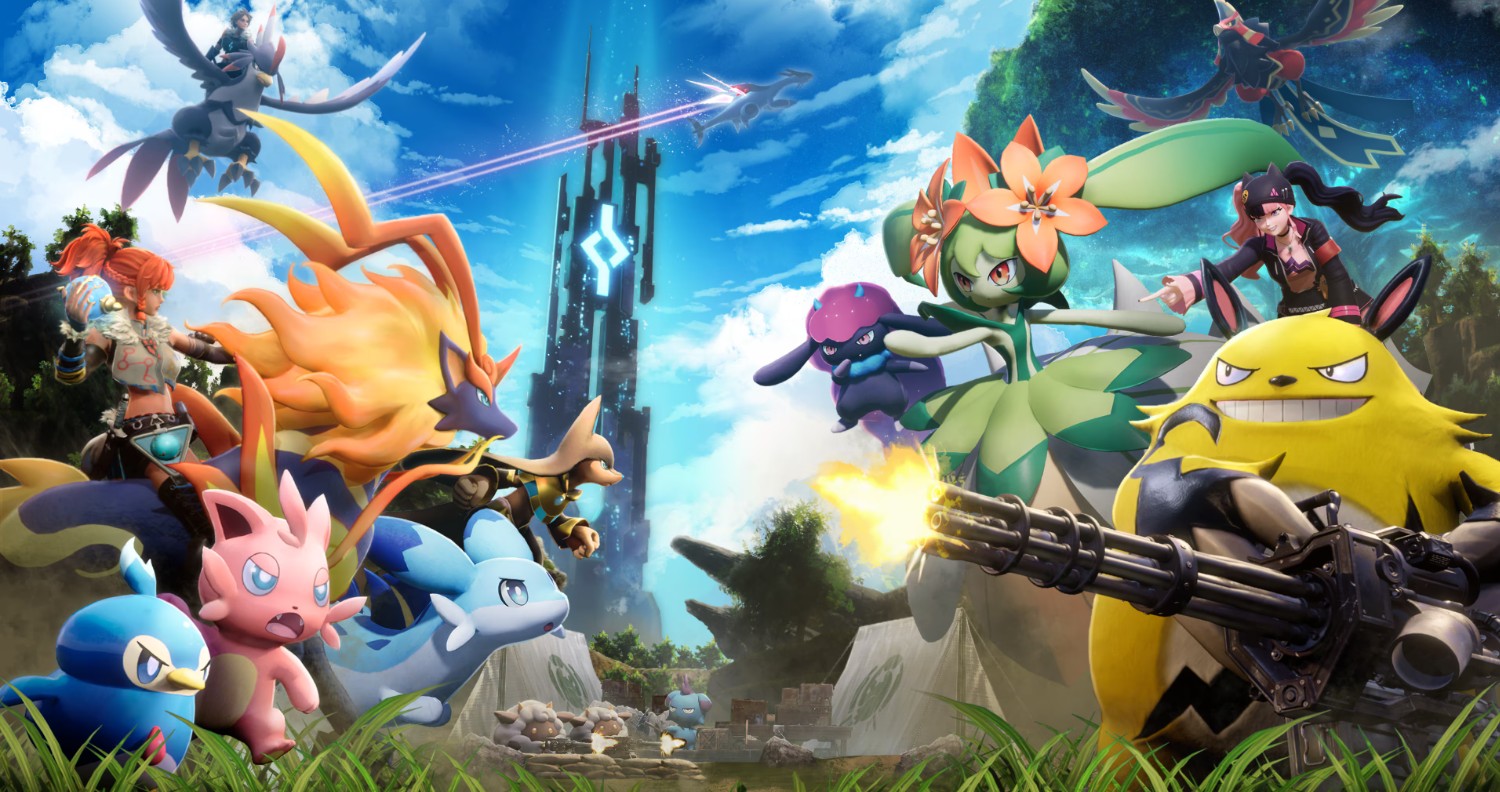
That is why the tonal contrast between adorable Pals and industrial machinery is more than a visual joke. The creatures need to be appealing for the design to work. Players form attachments to individual Pals, remember who helped build the first shelter, and develop favorites that remain in the party long after stronger options appear.
Those attachments make the production systems uncomfortable in a way they would not be if Pals were anonymous machines.
The darker lore also explains why Palworld’s mixture of creature collecting and survival crafting feels coherent despite its chaotic presentation. Creature collecting is about emotional attachment. Survival crafting is frequently about converting nature into usable resources. Palworld places the same creature inside both traditions.
The result is a game where affection and exploitation can exist inside the same menu.
FAQ
Is Palworld’s story actually dark?
Yes. Although Palworld often uses comedy and colorful creature designs, its setting includes forced labor, poaching, corruption, genetic experimentation, vanished civilizations, and conflicts over control of Pals. Most of this material is presented through mechanics, journals, Pal descriptions, and environmental storytelling.
Are Pals secretly transformed humans?
This is a fan theory rather than confirmed canon. The game establishes genetic experimentation and several mysteries surrounding Pal biology, but it does not confirm that all Pals were originally human.
What happened to Palworld’s ancient civilization?
The civilization’s complete fate remains deliberately mysterious. Its ruins and inscriptions show that it possessed advanced knowledge involving Pals, but the game does not reduce its disappearance to one simple, universally confirmed cause.
Why are the tower bosses paired with powerful Pals?
Their partnerships represent different relationships between humans and Pals. Some are based on loneliness or loyalty, while others involve ideology, authority, experimentation, or the pursuit of power. The journals provide additional context that the boss battles alone do not communicate.
Does Palworld Version 1.0 explain the World Tree?
Version 1.0 makes the World Tree accessible and places it at the center of the main story’s climax. It provides substantially more context about Palpagos and its larger mystery, although the setting still preserves room for interpretation and future development.
Why the Darkness Behind Palworld Matters
Palworld’s lore works because it does not exist separately from the player’s daily routine. The mystery of the ancient civilization, the cruelty of the factions, and Victor’s experiments all reflect choices the player encounters on a smaller scale.
The world repeatedly demonstrates how easily companionship becomes ownership and how quickly survival becomes a justification for control. Yet it also allows genuine care, loyalty, and cooperation to exist inside that imperfect system.
That tension is the real source of Palworld’s darkness. The game does not hide evil beneath an innocent world. It builds a world where affection and exploitation have become dangerously difficult to separate.
If this analysis made you want to explore Palpagos again with its journals and environmental clues in mind, you can check Palworld here.
“`