Complete Dragon Quest 1 Story Explained: Alefgard, Erdrick, and the Dragonlord
The Dragon Quest 1 story is simple on the surface: a lone hero crosses Alefgard to defeat the Dragonlord and restore light to the world. But beneath that classic fantasy structure, Dragon Quest builds one of the most important foundations in console RPG history: a kingdom in decline, a legendary bloodline, a stolen source of hope, and a villain who understands temptation as much as destruction.
Affiliate disclosure: this article contains affiliate links. If you buy through them, Broken Build Studios may earn a small commission at no extra cost to you.
For modern players, the story of Dragon Quest I can feel almost minimalist. There are no long cutscenes, no party banter, and no cinematic flashbacks explaining every emotional beat. Instead, the game uses towns, clues, geography, combat progression, and player discovery to tell its tale. That is exactly why it still matters. It is not just a story you watch. It is a story you reconstruct while surviving the world.
The World Before Dragon Quest 1: Alefgard and the Legacy of Erdrick
The story begins in Alefgard, a land once saved by the legendary hero Erdrick. Before the events of the game, Erdrick defeated a great evil and helped return peace to the realm. That peace, however, does not last forever. Like many classic RPG worlds, Alefgard is not presented at its golden age. It is presented after hope has already started to collapse.
The key symbol of that hope is the Sphere of Light, a sacred object that kept darkness away from the kingdom. When the Dragonlord rises, he steals the Sphere of Light and unleashes monsters across Alefgard. Roads become dangerous. Villages become isolated. Ruins begin to tell stories of places that failed to survive the return of evil.
This is one of the most elegant ideas in the Nintendo Switch version of Dragon Quest: the player does not enter a world waiting politely for a hero. The world is already wounded. The monsters are already outside the castle walls. The darkness has already won ground.
The Hero: A Descendant of Erdrick
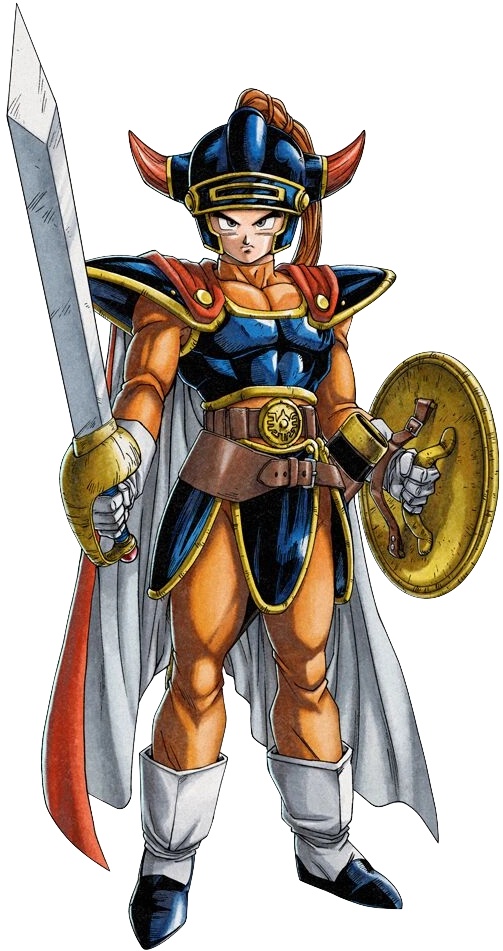
The protagonist of Dragon Quest is not a fully written character in the modern RPG sense. He does not have long dialogue scenes or a defined personality arc. Instead, he works as a mythic avatar: a young warrior descended from Erdrick, carrying the weight of an old legend into a broken present.
That design choice is important. The hero is both a character and a player vessel. When the king sends him into the world, the player is not simply controlling someone else’s destiny. The player is stepping into the role of the last person capable of turning legend back into action.
From a game design perspective, this is incredibly clean. The story gives you identity, purpose, and danger almost immediately. You are Erdrick’s descendant. The Dragonlord threatens Alefgard. The Sphere of Light is gone. Princess Gwaelin has been taken. The world needs saving. The rest is up to your movement, your decisions, your grinding, your equipment, and your understanding of the map.
The Beginning at Tantegel Castle
The adventure begins at Tantegel Castle, the safest and most important location in Alefgard. The king explains the crisis and sends the hero out on his quest. In modern terms, Tantegel acts as the narrative hub, tutorial space, and emotional anchor of the entire game.
What makes the opening powerful is how little it overexplains. The castle tells you enough to understand the mission, but the rest of the story lives outside. The townspeople, the dangerous fields, the caves, the ruined settlements, and the distant silhouette of the Dragonlord’s castle all become part of the storytelling.
Even the geography is narrative. The Dragonlord’s castle can be seen across the water from Tantegel, close enough to feel threatening but unreachable at the start. This is one of the most memorable pieces of world design in early console RPGs. The final goal is visible almost immediately, but the path to reach it requires knowledge, preparation, and proof that the hero has grown.
Princess Gwaelin and the Human Cost of the Dragonlord’s Rule
One of the central story threads in Dragon Quest I is the rescue of Princess Gwaelin. She has been captured and hidden away, turning the larger crisis of Alefgard into something more personal. The Dragonlord is not just a distant evil sitting in a castle. His influence reaches families, kingdoms, and individual lives.
The search for Gwaelin leads the hero into dangerous territory. Her rescue is not framed with modern cinematic drama, but it gives the quest emotional texture. Saving Alefgard is the grand objective, but saving the princess reminds the player that the kingdom is made of people, not just castles and maps.
In some versions and interpretations of the game’s structure, rescuing Gwaelin is not strictly required to reach the final confrontation. That detail actually makes the story more interesting. The game allows the player to focus on the main objective, but the heroic version of the journey naturally includes her rescue. Mechanically, it is a quest. Narratively, it is a test of what kind of hero Erdrick’s descendant is becoming.
How Dragon Quest 1 Tells Its Story Through Exploration
The complete Dragon Quest 1 story is not delivered in a straight line. It is scattered across Alefgard. This is one of the most important things to understand when looking at the game today.
Instead of pushing the player from one cutscene to another, the game uses exploration as narrative structure. Towns provide rumors. NPCs point toward shrines, caves, cursed places, hidden items, and ancient clues. The player slowly learns that defeating the Dragonlord is not as simple as walking into his castle with a sword.
The hero needs to understand the old legacy of Erdrick. He needs to collect sacred objects connected to light, rain, and hidden proof of lineage. He needs to uncover enough of Alefgard’s history to create the path forward. The story becomes almost archaeological: the player is digging through what remains of a heroic past in order to build a future.
This is where the RPG design becomes storytelling. Leveling up is not just a number going higher. It represents the hero becoming worthy of the legend. Better equipment is not just stronger gear. It is the physical expression of progress. Each new spell, each new town reached, and each dangerous cave survived makes the world feel less impossible.
The Dragonlord: More Than a Final Boss
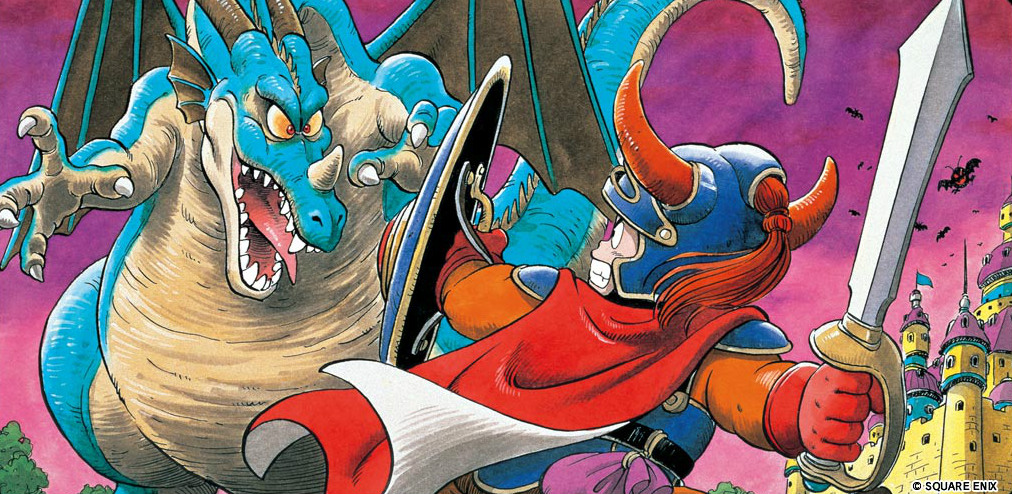
The Dragonlord is the central evil of Dragon Quest, but what makes him memorable is not only his power. It is his role as the opposite of Erdrick’s legacy. Erdrick represents courage, restoration, and the defense of Alefgard. The Dragonlord represents corruption, domination, and the theft of light itself.
Throughout the game, the Dragonlord’s presence is felt indirectly. Monsters roam the fields because of him. The Sphere of Light is gone because of him. The kingdom is afraid because of him. Even before the player meets him, the world has already been shaped by his actions.
This is a smart way to build a villain with limited text. The Dragonlord does not need constant appearances. His castle, his monsters, and the ruined condition of Alefgard communicate his threat. By the time the player finally reaches him, the confrontation feels earned because the entire world has been preparing you for it.
The Road to Charlock Castle
Charlock Castle is the Dragonlord’s domain and the final destination of the hero’s journey. But the most important part of reaching it is that the castle is visible before it is accessible. This single design choice turns the entire adventure into a promise.
At the start, the player can see where evil lives. The problem is not finding the final dungeon. The problem is becoming strong, wise, and prepared enough to reach it. This creates a powerful RPG loop: explore, gather information, fight monsters, earn gold, buy better equipment, gain levels, and push a little farther into the unknown.
Eventually, the hero gathers what is needed to create the Rainbow Drop, allowing a bridge to form and finally opening the way to Charlock. In story terms, this is the moment where scattered legend becomes action. The fragments of Alefgard’s past finally connect, and the hero earns the right to cross into the heart of darkness.
Erdrick’s Equipment and the Weight of Inheritance
One of the most satisfying parts of the Dragon Quest 1 story is how the hero’s connection to Erdrick becomes more than a line of dialogue. As the adventure progresses, the player can discover legendary equipment associated with Erdrick’s legacy.
This matters because inheritance in Dragon Quest I is not automatic. The hero may be descended from Erdrick, but bloodline alone does not defeat the Dragonlord. The player must prove that legacy through action. You earn power by surviving. You earn knowledge by listening. You earn progress by respecting the world’s clues.
From a game-dev perspective, this is a strong example of mechanical storytelling. The game does not need to say, “You are becoming a legendary hero” every five minutes. It lets the player feel that transformation through equipment, stats, magic, map access, and confidence.
The Final Choice: The Dragonlord’s Temptation
Near the end of the story, the Dragonlord does something more interesting than simply attack. He offers the hero a bargain. Instead of fighting, he tempts the hero with power and control, offering to divide the world with him.
This moment is one of the most iconic narrative beats in early RPG history because it gives the villain a philosophical edge. The Dragonlord understands that evil is not always just destruction. Sometimes evil is the invitation to stop struggling, accept power, and betray the purpose that brought you there.
The correct heroic path is to refuse. The hero’s journey has never been about ruling Alefgard. It has been about restoring it. Accepting the Dragonlord’s offer would mean abandoning Erdrick’s legacy, the king’s trust, Princess Gwaelin’s rescue, and the hope of every town that helped the player understand the path forward.
The Final Battle and the Return of Light
After refusing the Dragonlord’s temptation, the hero faces him in the final battle. The confrontation reveals the Dragonlord as a monstrous force worthy of the entire journey. This is where all the RPG progression pays off: levels, spells, equipment, healing resources, and the player’s understanding of combat.
Unlike many later RPGs, Dragon Quest I is built around a one-on-one combat structure. There is no party to hide behind. Every victory belongs to the hero alone, and every mistake carries weight. That makes the final battle feel personal. It is not an army against darkness. It is one descendant of Erdrick standing against the source of Alefgard’s suffering.
When the Dragonlord is defeated, the stolen light is restored, and Alefgard is saved from darkness. The story closes with the hero recognized not only as Erdrick’s descendant, but as someone who has created his own legend. The old heroic bloodline continues, but the game makes clear that legacy only matters when someone has the courage to carry it forward.
Why the Dragon Quest 1 Story Still Works
The Dragon Quest 1 story still works because it understands the power of clarity. The game does not try to overwhelm the player with complicated lore. Instead, it builds a clean myth: light was stolen, darkness returned, a hero must rise, and the world must be restored.
That simplicity is not a weakness. It is a design strength. Every major element supports the core fantasy. Alefgard feels dangerous. The Dragonlord feels present even when unseen. Erdrick’s legacy gives the hero mythic weight. Princess Gwaelin gives the journey a human face. The Rainbow Drop transforms exploration into revelation. Charlock Castle turns a visible threat into a final destination.
For RPG fans, especially anyone interested in game design, Dragon Quest is fascinating because it shows how much story can be communicated through structure. The game teaches the player how to read a world: talk to NPCs, respect danger, notice geography, connect clues, and understand that progression is both mechanical and narrative.
Dragon Quest 1 as the Blueprint for Console RPG Storytelling
Many later RPGs would become bigger, more cinematic, and more emotionally complex. But the DNA of the genre is already visible here. The kingdom in crisis. The lone hero. The overworld. The towns. The dangerous caves. The equipment upgrades. The final dungeon across the water. The villain’s castle waiting from the beginning. The sense that every step away from safety is part of the story.
That is why the complete Dragon Quest 1 story should not be judged only by modern standards of dialogue volume or cutscene count. Its storytelling is environmental, mechanical, and symbolic. It is a story about light and darkness, but also about how RPGs turn uncertainty into mastery.
At the beginning, Alefgard is terrifying. A few steps too far from Tantegel can mean disaster. By the end, the same world feels readable. Not easy, but understandable. The player has learned its rhythms. That transformation is the real narrative arc. The hero grows, but so does the player.
Final Thoughts: The Power of a Simple Legend
The story of Dragon Quest I is not powerful because it is complicated. It is powerful because it is pure. It takes the oldest fantasy structure imaginable, a hero against darkness, and turns it into an interactive journey where every battle, clue, and step across the map matters.
For Broken Build Studios, this is the kind of RPG history worth revisiting. Not just because of nostalgia, but because it reminds us that strong game design can make even a simple story feel personal. Alefgard is not saved in a cutscene. It is saved through patience, learning, danger, and the slow transformation of a vulnerable player into a confident hero.
If you want to experience where this legendary RPG lineage began, you can check out Dragon Quest and revisit Alefgard with the eyes of both a player and a game designer.